Missouri Foster Children Stuck in Hospitals With No Placement
Children in State Custody Left Waiting in Hospital Rooms
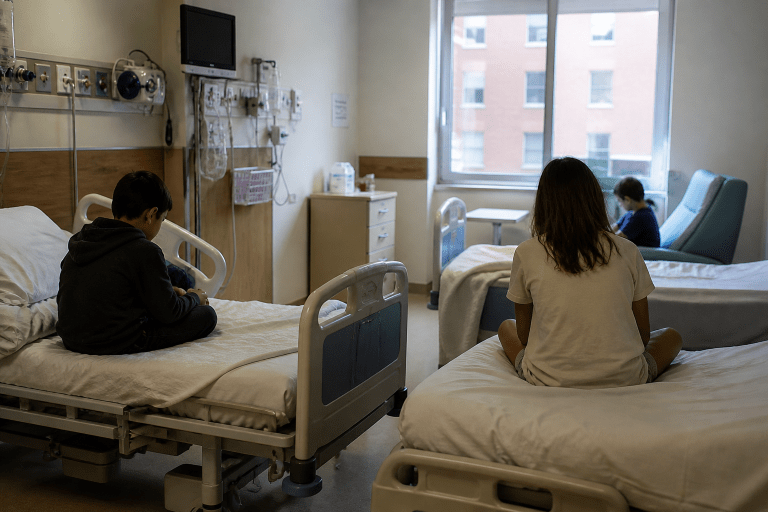
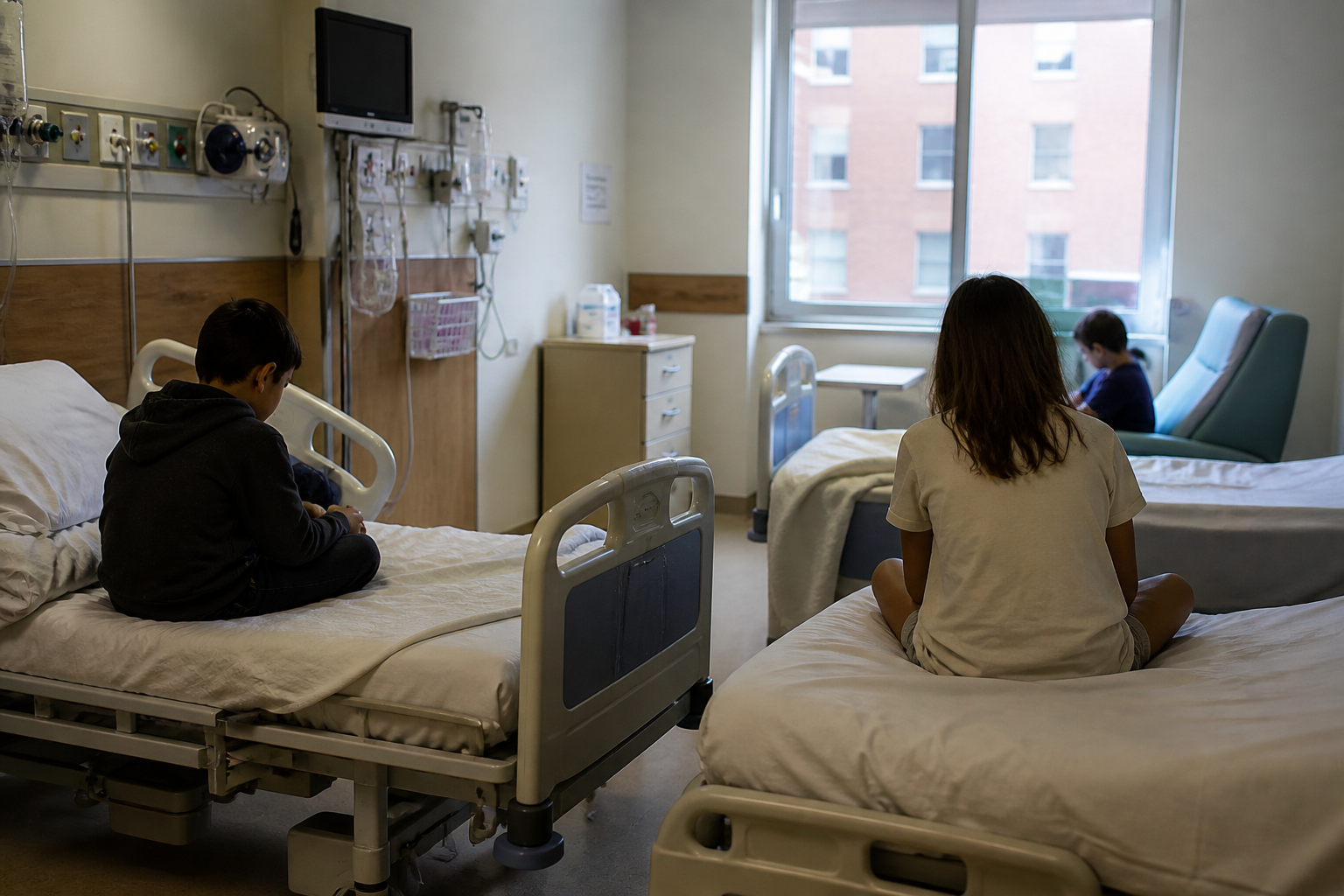
Missouri — Foster children across the state are being kept in hospitals for weeks — sometimes longer — even after doctors have cleared them to leave.
The reason isn’t medical. It’s that there’s nowhere for them to go.
What’s emerging across Missouri isn’t a one-off breakdown. It’s a system under strain — one where the state continues to take custody of children but doesn’t have enough placements to handle them.
Hospitals are filling the gap.
What’s Happening Inside Missouri Hospitals
In the St. Louis area, at least five foster children were kept in hospitals despite no longer needing medical care. On average, they stayed around 56 days.
That’s nearly two months in a setting designed for short-term treatment — not daily living.
Reports indicate this isn’t limited to one region. Hospitals across Missouri have seen similar situations, where children are medically cleared but remain because no foster home, residential program, or appropriate placement is available.
In practical terms, hospital rooms are being used as holding spaces.
How Big the Problem Is
Missouri’s foster care system serves more than 13,000 children.
As of April 2023:
- 52 foster children were staying in medical hospitals
- 258 were placed in mental health facilities
The rise in mental health placements suggests the system is leaning more heavily on institutional settings as traditional placements become harder to find.
It’s not just a shortage — it’s a shift in how children are being housed.
What’s Driving the Breakdown
At the center of the issue is capacity.
Missouri has reportedly lost about half of its residential treatment beds for children with higher needs. At the same time, providers are struggling to hire and retain staff, making it difficult to reopen or expand programs.
The result is a bottleneck:
- Children enter the system
- They receive medical or behavioral evaluations
- They’re cleared to leave
- No placement exists
So they stay.
Who Is Most Affected
The children most likely to end up in this situation are those with more complex needs — behavioral health challenges, developmental disabilities, or trauma-related conditions.
These are the same children who require the most structured and specialized care. But those placements are also the hardest to find.
Hospitals, by contrast, are not equipped to provide that kind of support. They aren’t designed for long-term development, consistent routines, or stable relationships.
They’re a temporary solution being used as a long-term fallback.
The Role of State Agencies
Responsibility for these cases is split between the Missouri Department of Social Services — specifically the Children’s Division — and the Missouri Department of Mental Health.
That overlap can create delays, especially when children need both child welfare placement and behavioral health services.
Funding structures, eligibility requirements, and limited capacity across both systems make coordination difficult. In the meantime, children wait.
What Lawmakers Have Done — And Haven’t Done
Missouri lawmakers have acknowledged the issue and passed legislation directing agencies to study it and improve coordination.
But the response so far has focused on analysis, not immediate correction.
And the problem isn’t theoretical. It’s already happening.
Why This Raises Legal and Accountability Questions
When the state takes custody of a child, it assumes responsibility for their care and placement.
That includes providing an environment that meets the child’s needs.
Federal law under 42 U.S.C. § 671 requires states to maintain appropriate placement settings and oversight for children in foster care.
Keeping children in hospitals without medical necessity raises questions about whether those standards are being met.
There are also broader due process considerations. Once the state removes a child from their family, it becomes responsible for the conditions that child is placed in.
If those conditions fall short, the system itself becomes part of the problem.
What Should Have Happened
In a functioning system, children would not remain in hospitals once they’re cleared to leave.
There would be:
- Available foster homes
- Therapeutic placements for higher-needs cases
- Residential programs with capacity
- Clear coordination between agencies
- Discharge plans ready before medical clearance
Hospitals would be used for care — not placement.
Why This Matters
This isn’t just about logistics. It’s about what happens after the state removes a child from their home.
If the system can’t provide stable, appropriate placements, the consequences fall directly on the children.
Extended hospital stays can mean isolation, disrupted education, lack of normal routine, and increased emotional strain.
For children already dealing with trauma, that matters.
And it raises a larger question: what happens when the system designed to protect children doesn’t have the capacity to care for them?
Conclusion
Missouri’s foster care system isn’t using hospitals because it wants to. It’s using them because it has to.
That’s the reality these cases point to.
Children are not staying in hospitals because they need medical care. They’re staying because the system has nowhere else to place them.
Until placement capacity, staffing, and coordination improve, that pattern is unlikely to change.
Sources and Disclaimer
This article is based on documented reporting and investigative findings, including data reviewed in the Father’s Advocacy Network report.
Officials and agencies are invited to respond or provide clarification by contacting press@fathersadvocacynetwork.com.
Disclaimer: Father’s Advocacy Network is not a law firm. This content is for informational and educational purposes only.