Killed at Six, Buried in the Backyard, Unnoticed for Four Years: The Failure That Let Kennedy Schroer Disappear
After her adoption was finalized, the oversight stopped. By the time anyone realized Kennedy Schroer was dead, she had been gone — and buried in her family’s backyard — for nearly four years.
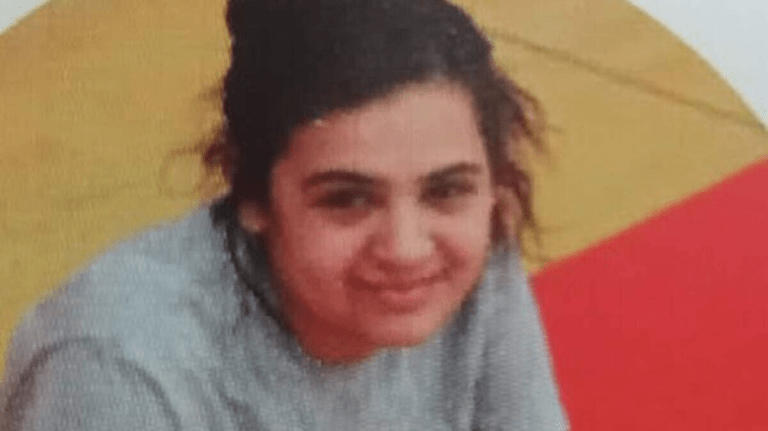
She was born Natalie Marie Garcia in Tulsa, Oklahoma, in July 2014. After she was adopted, she was renamed Kennedy Jean Schroer. She was six years old when she died — suffocated, prosecutors say, after being forced into a small box as punishment for moving in her sleep. Her body was placed in a trash bag and buried roughly two feet deep in the backyard of her home in Rose Hill, Kansas. And there she remained, undiscovered, for almost four years.
No caseworker noticed. No agency knocked. No system that had once deemed her in need of protection ever came back to confirm she was alive. Kennedy’s death is among the most damning indictments imaginable of what happens after an adoption is finalized and the oversight simply ends.
From Foster Care to a Finalized Adoption
In August 2017, Natalie and two of her biological sisters — then four years old and nine months old — were placed as foster children with Joseph and Crystina Schroer of Rose Hill. In the fall of 2019, after their biological parents relinquished their rights, the children became wards of the state. In November 2019, Natalie, her sisters, and two other children — five girls in total, ages roughly one to six — were adopted by the Schroer family.
On paper, this was the system working exactly as designed: vulnerable children moved out of foster care and into a “permanent,” legally finalized home. It is the outcome the entire apparatus is built to produce and to celebrate. The celebration was catastrophically premature.
What Happened After the Paperwork
According to the investigation later detailed by the Rose Hill Police Department, the abuse began almost immediately after the adoption was finalized. Crystina Schroer isolated the adopted children. Two of the girls had been seeing mental health professionals before the adoption — and once it went through, those services stopped.
The children were pulled from in-person school and switched to homeschooling under the stated justification of protecting an immunocompromised household member. There were no school records supporting the behavioral problems Crystina described to others — only her own note withdrawing the girls. With school gone and services severed, the last outside eyes on these children closed.
Crystina placed cameras throughout the home that alerted her phone to any movement — even a child shifting in bed at night without making a sound would trigger her rage.
Investigators determined Natalie was last known to be alive on Halloween 2020 and was killed sometime that November. Prosecutors said she died while trapped in a box used as punishment. A sister told investigators their mother would pile objects on top of the box to stop the child inside from moving. The Sedgwick County Forensic Science Center concluded her death was a likely homicide by suffocation.
Four Years of Silence
The most disturbing fact of this case is not a single act of cruelty. It is the duration of the silence that followed. From November 2020 until September 2024 — nearly four years — no authority registered that a six-year-old child was missing and dead.
The case only surfaced when Crystina Schroer attempted suicide by overdose. When police asked her why, she told them Kennedy was buried in the backyard. Cadaver dogs were brought in. A forensic dig roughly 23 inches down recovered the child’s remains in a trash bag. DNA confirmed her identity on September 27, 2024.
Investigators also alleged the parents continued receiving Medicaid payments tied to Kennedy after her death — meaning the state was, in effect, still paying for the care of a child it did not know was dead.
The Sentences — and the Disparity
In November 2025, Crystina Schroer was sentenced to roughly 18 years in prison after pleading no contest to second-degree murder, child abuse, making false information, and theft by welfare fraud. The following month, Joseph Schroer — who pleaded no contest to two counts of aggravated child endangerment and Medicaid fraud — received 60 days in jail and four years of probation, with prison time only if he violates its terms.
“Your failure to protect your children was a dereliction of your duty as a parent… and your weakness is no excuse.” — Chief Judge David Ricke, addressing Joseph Schroer at sentencing
The Hole in the System This Case Exposes
Before an adoption is finalized, prospective parents are studied closely: home studies, interviews, background checks, repeated visits. The scrutiny is intense precisely because the stakes are a child’s life. Then the adoption is finalized — and almost all of that scrutiny vanishes. In most states, post-adoption oversight is minimal to nonexistent. The file is marked permanent. The case is closed. The visits stop.
Kennedy’s case is what that policy looks like at its worst. The very features that made these children vulnerable — isolation, withdrawal from school, severed services — are the features that post-adoption monitoring exists to catch. There was no monitoring. So no one caught anything, for four years.
Rose Hill’s police chief, in the aftermath, called for exactly the reforms this case demands: stronger sentencing for those who abuse and kill children and for those who permit it, and increased oversight of the organizations that place children and the homes that receive them.
What Would Have Saved Kennedy
- Mandatory post-adoption check-ins for a defined period after finalization — in person, laying eyes on the child.
- Automatic review when an adopted child is abruptly withdrawn from school.
- Cross-checks between continued benefit payments and proof of a living, present child.
- Continuity of mental health services that existed before adoption, not their quiet termination after.
Say Her Name
Her name was Natalie. Her name was Kennedy. She was six years old, and the system that promised her a “forever family” stopped looking the moment the paperwork cleared. For four years, the only record that she had ever existed was a Medicaid payment and a grave in the backyard.
As her community said after the sentencing: Natalie’s death, like so many others, risks being pushed into the shadows by the people who control the levers of power. We refuse to let it. Say her name.
Finalization is not the same as safety.
Father’s Advocacy Network documents what happens to children after the system declares its job done. Help us demand real post-adoption oversight — so no child disappears the way Kennedy did. Let the silenced speak.